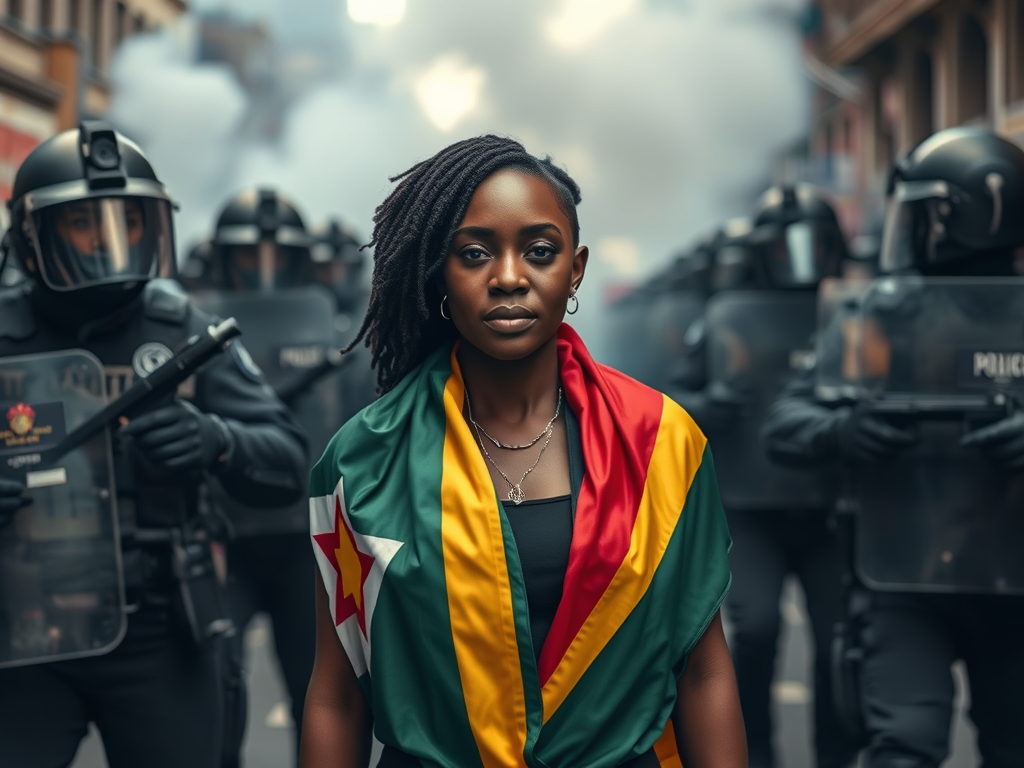
A stay-away or shutdown can be powerful—but only if it’s widely supported and well-organized. Otherwise, it fizzles out or gets crushed. What citizens need is mass civic mobilization—workers, students, church groups, vendors, professionals, rural communities—coming together with a unified front and a clear message. Not just anger, but organized resistance.
Think of how Sudanese citizens ousted Bashir, or how South Africans mobilized against apartheid—it took years of consistent, networked organizing. Decentralize the Resistance
If the fight is only happening in Harare or on X, it’s easy to shut it down. Movements grow stronger when they’re decentralized—in towns, growth points, rural hubs—where the state can’t easily control everything. Localized action spreads the risk and multiplies the impact 91 arrested on the 31st of March and still to be granted bail.
Strategic Nonviolent Resistance
This doesn’t mean being weak. It means being smart. Nonviolent action has overthrown more regimes than armed struggle in the last 50 years. But it needs:
– Clear goal. (e.g. Resignation, ).
– Mass participation, not just activists.
– Persistence, even when met with repression.
Expose the System Internationally
ZANU-PF relies on optics and playing the Pan-African card. But if enough Zimbabweans document, share, and expose the rot—through diaspora networks, independent media, and international platforms—the pressure can build from outside too. Sanctions alone won’t fix things, but global awareness helps delegitimize dictatorships.
Digital & Underground Organizing.
With fear and surveillance, open organizing is dangerous. But encrypted platforms, anonymous blogs, underground newsletters—these can keep movements alive even under tight control. Think of how Zimbabweans in 2016 used WhatsApp during #ThisFlag to mobilize silently but powerfully.
Electoral Power, But With Reform
Right now, elections in Zim are rigged. But that doesn’t mean citizens should ignore them. It means fighting for electoral reform- first—independent commissions, diaspora vote, voter education—and using that as a rallying point.
Shift the Cultural Narrative
The liberation legacy has been weaponized. But younger Zimbabweans can shift that narrative—from fear to freedom, from slogans to survival. Music, poetry, comedy, and art have always played a role in revolution. **Culture can be a weapon too.**
ZANU-PF won’t reform itself. Power concedes nothing without demand. And demand needs unity, strategy, and courage. People like Bombshell Geza are signals of fracture inside the ruling elite—but true change will come from *below*, from ordinary citizens, from the POVO, from grassroots reclaiming their agency, step by step.
What gives you hope right now? Is it the youth, the diaspora, the artists, or the silent resilience of people refusing to break?
 #mkomanawamamoyo
Leave a comment