
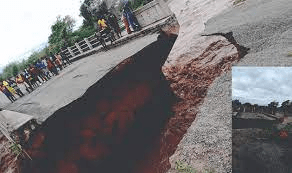
Earlier this month, Cyclone Alvaro made landfall along the coast of central Mozambique, bringing torrential rains and winds over 100 km/h to parts of southeast Africa. While the cyclone’s effects were most devastating in Mozambique and South Africa, communities in neighboring Zimbabwe also faced severe impacts from the powerful storm.
Heavy rains from the cyclone’s outer bands caused widespread flooding across much of eastern Zimbabwe. Some of the worst flooding occurred in the Chimanimani district, where over 100mm of rain fell in just 24 hours. Rivers burst their banks, inundating homes, roads, bridges and farmland. Landslides destroyed entire villages as hillsides became saturated. Initial reports indicate that at least 150 homes were damaged or destroyed in Chimanimani alone. Tragically, the death toll has risen to over 50 people across Manicaland province and is expected to increase further as rescue efforts continue.
The flooding has completely cut off road access to some remote areas, hampering relief operations. Communities are stranded without food, water and medical supplies. The full scale of the damage to infrastructure, agriculture and livelihoods is still being assessed. The cyclone hit Zimbabwe during the peak of the harvest season, and it’s estimated that thousands of small-scale farmers have lost their entire crops and means of income due to the floods.
Coming so soon after a severe drought earlier in the year, Cyclone Alvaro has dealt a double blow to Zimbabwe’s vulnerable rural communities that were barely recovering. Climate change is increasing the frequency and intensity of extreme weather events worldwide. Small island developing states and least developed countries like Zimbabwe, who contribute very little to global warming, are bearing the brunt of its impacts. This calls into question issues of climate justice and how nations can build resilience to climate hazards in a fair and equitable manner.
As rescue efforts continue and the early recovery process gets underway in Zimbabwe, the international community must step up support. Rebuilding lives and livelihoods will require significant financial assistance. But more importantly, ambitious global action is needed to curb greenhouse gas emissions in line with limiting warming to 1.5°C, as called for in the Paris Agreement. Failure to do so will only increase the climate injustice faced by countries like Zimbabwe in future years. Urgent global climate action and climate justice are intertwined and both are needed now more than ever.
 #mkomanawamamoyo
Leave a comment